Get in Touch
We are here to help you 7 days a week and respond within 24 hours. Plus, you can find most answers to your questions right on FAQ page.

Home >
WASSAN Interns Blog
A repository bank of our latest research, training materials, media sources to help organisations networks grow
Likhitha & Nandini, College of Agricultural Engineering, Madakasira | December 2nd 2025
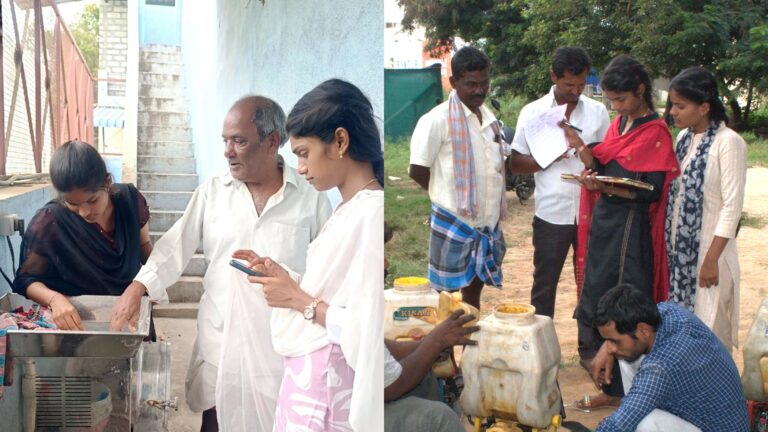
What began as a simple 10-week machinery survey in the Nallacheruvu and Amadaguru mandals of Sri Sathya Sai district soon turned into a profound learning experience about the lives, hardships, and resilience of rural farmers. Travelling through remote, forest-side villages with poor transport and weak network connectivity—often walking long distances after surveys and waiting hours to meet farmers who left for work before sunrise—gave us a real understanding of the challenges behind agricultural mechanization.
Across 64 villages in 12 Gram Panchayats, including Ballepallithanda and Malakavaripalli, many farmers were initially hesitant to respond due to past negative experiences with government surveys. But with patient conversations and transparency, trust gradually grew.
.
Every machine we encountered had a story. Many lay unused due to expensive spare parts, lack of local repair facilities, or damages sustained during critical agricultural seasons. This pushed farmers to rely heavily on rentals, adding financial strain to already limited incomes.
.
In total, we surveyed more than 530 machinery units:
– 108 were non-functional.
– 50 were partially functional.
These insights led to a two-day Machinery Revival Camp, where 25 machines were repaired, and VLEs received hands-on technical training to continue offering repair services locally—reducing downtime and future repair costs for farmers.
.
This internship gave us the opportunity to explore different types of farm machinery, observe repair processes, and understand the most common issues affecting rural tools. Above all, we learned that every non-functional machine impacts a family’s livelihood—and that timely extension services can bridge critical technology gaps.
.
The warmth of the farmers, the support from WASSAN staff, and the tangible impact of the revival camp made this journey deeply meaningful and transformative for both of us.
Gowthami Gongati, Dr. NTR College of Agricultural Engineering, Bapatla | December 2nd 2025
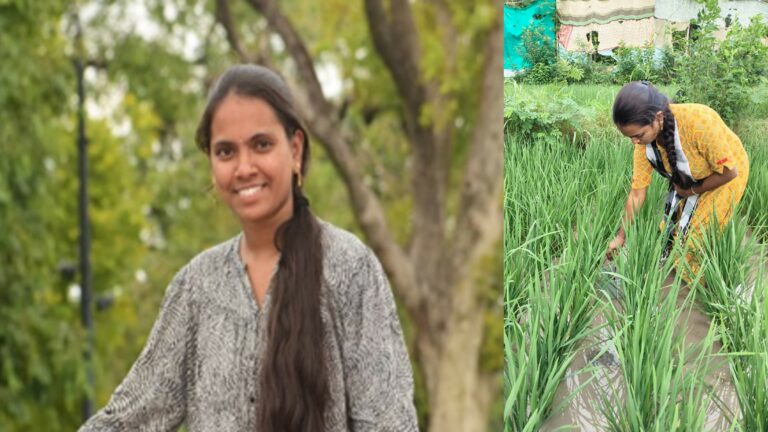
During my internship, I worked on a project aimed at improving water-use efficiency in paddy cultivation using low-cost sensors. This experience helped me connect classroom learning with real-world field challenges. Interacting with farmers gave me a deeper understanding of the practical difficulties they face—especially the effort it takes to manually measure water levels in muddy, uneven paddy fields.
This journey strengthened my skills in documentation, coordination, and teamwork with experts, community resource persons, and local farmers. As the project was new to me, I began learning from the basics and gradually built a strong foundation, including developing basic C++ and programming skills.
.
The laboratory setup came with its own set of challenges. Even a small wiring error could stall the entire system. Establishing smooth communication between the ESP32 and the ultrasonic sensor, and between the SIM module and the ESP32, was a significant milestone. Receiving accurate distance readings and ensuring stable GSM connectivity for sending alerts to farmers’ mobile phones were major achievements. Testing the device in real field conditions and confirming that the ultrasonic sensor functioned reliably during installation was especially rewarding.
After installation, the farmer expressed enthusiasm and requested the technology for other fields—an encouraging moment that boosted my confidence and motivation.
.
Overall, this internship was an enriching experience that gave me firsthand exposure to field realities and demonstrated how simple, low-cost technologies can meaningfully support farmers and improve efficiency in paddy cultivation.
Maheswari & Prashanti, Dr. NTR College of Agricultural Engineering, Bapatla, | December 2nd 2025
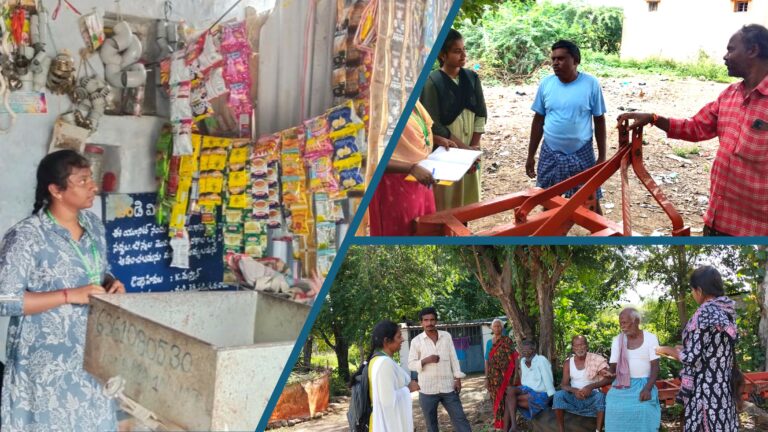
Our internship project at WASSAN focused on assessing the energy footprints of village-based enterprises and Gram Panchayats in the rural mandals of Nallacheruvu, Amaduguru, and Vayalapadu. The goal was to understand how energy is used, identify inefficiencies, and explore practical ways to improve energy consumption through better practices and appropriate technologies.
Through extensive field visits, we assessed various rural enterprises—flour mills, oil rotaries, dhal mills, mini oil mills, masala grinders, and other small processing units. Interacting directly with entrepreneurs and farmers helped us understand real challenges such as frequent power fluctuations, high operational costs, outdated machinery, and the absence of timely service facilities.
.
We also conducted an energy audit of the Ubicherla Gram Panchayat, which had the least number of agricultural machines. This raised important discussions about the need for an Agriculture Service Centre (ASC) supported by WASSAN to help farmers access machinery at lower costs and improve their farm operations.
.
Engaging with farmers and understanding their daily realities was deeply insightful. As we observed their work, listened to their challenges, and documented their energy usage patterns, it became clear how crucial these small rural enterprises are for livelihoods. Farmers shared honestly about rising electricity bills, power issues, and how even minor breakdowns affected their income. Travelling across villages and speaking with different groups taught us how to communicate technical concepts in simple and meaningful ways.
This internship made us realise that rural development is not just about policies or programs—it is about people, their aspirations, and the small changes that can transform their lives. The experience strengthened our understanding of rural systems and the importance of grounded, practical interventions.
.
We are grateful to WASSAN for giving us this opportunity to learn from the field, engage with rural communities, and contribute to a project that has real impact.
M. Vishnu Vardhan, College of Agricultural Engineering | December 2nd 2025

Over the last two months, my internship with WASSAN in the Araku and Paderu regions has been an eye-opening journey into the realities of tribal agriculture and the gaps in mechanization. What started as a simple data-collection assignment gradually transformed into a meaningful learning experience about people, landscapes, cultures, and the everyday struggles farmers face.
I visited 31 villages across 7 mandals. Each village had a unique identity—distinct cropping systems, traditions, and farming practices. Yet, the challenges were strikingly similar: persistent labour shortages, dependence on traditional tools, and limited access to mechanization.
.
The most memorable part of this journey was interacting with the farmers. They spoke candidly about erratic weather, tough terrain, lack of tools, and rising labour costs. Even when machinery was available, cultural norms, generational habits, and limited exposure prevented many from adopting new technologies. Farmers often preferred community labour and traditional practices—not out of resistance, but due to unfamiliarity, lack of confidence, and limited trust in machines.
My visit to the Agriculture Service Centre (ASC) provided deeper insights into both the potential and the constraints of mechanization support systems. Although the ASC housed a variety of machines, many were underutilized, poorly maintained, or idle due to low demand. VLEs shared practical challenges: delays in rental payments, unavailability of spare parts, and irregular demonstrations. It became clear that without sustained awareness-building and efficient management, even well-designed systems struggle to create lasting impact.
.
This internship offered much more than just data for a report. It helped me understand the importance of listening to farmers, respecting their context, and designing solutions that are truly practical. Walking through fields, observing farming constraints, and learning directly from tribal communities has reshaped my perspective on agricultural operations.
.
As I conclude this journey, I feel more inspired and committed to ensuring that technology reaches every farmer—effectively, respectfully, and right in their fields.
Ramyasri & Lavanya, Dr. NTR College of Agricultural Engineering, Bapatla | December 2nd 2025

Our internship with WASSAN offered us a unique opportunity to understand how renewable energy–based irrigation systems are shaping agriculture at the grassroots level. The journey began with an orientation session where we learned about WASSAN’s mission, its long-standing work in community-based natural resource management, and the importance of climate-resilient technologies. This introduction helped us see how development projects are thoughtfully planned, implemented, and monitored.
We conducted surveys on 36 solar energy carts across the Veeraghattam, Seethampeta, and Bhamini mandals of Parvathipuram Manyam district. During these visits, we interacted with farmers using solar-powered mobile energy carts and collected data on irrigation hours, changes in cropping patterns, maintenance challenges, and overall satisfaction—before and after adopting solar irrigation for both Kharif and Rabi seasons.
.
One of the key challenges we faced was that many farmers were hesitant or uncertain while sharing income-related information. Building trust required patience, repeated explanations, and communicating slowly and clearly in simple terms. This helped us improve our communication skills and understand the importance of rapport-building during fieldwork.
.
Long travel distances between scattered villages, unpredictable weather, and coordinating with farmers based on their availability were additional challenges. These experiences taught us that true development work happens in dynamic, real-world conditions—not in structured classroom environments.
.
A particularly memorable moment was meeting an elderly farmer who proudly shared how the energy cart helped him cultivate an additional piece of land that earlier remained fallow due to lack of water. He explained how the solar pump reduced his diesel expenses and encouraged him to grow vegetables in the Rabi season. His story highlighted how a small technological intervention can significantly improve rural livelihoods.
This internship strengthened our skills in conducting professional field surveys, analyzing real data, and understanding seasonal income variations. We learned how renewable energy reduces irrigation costs, increases cropping intensity, and why farmer-friendly design and trust-building are essential for successful technology adoption. We also gained insight into the socio-economic factors that influence how such technologies are received and used.
.
Overall, this internship enhanced our technical knowledge, analytical abilities, and confidence. More importantly, it gave us a deeper appreciation of the role that sustainable energy solutions—like solar energy carts—play in supporting small and marginal farmers.
.
We are grateful to WASSAN and the entire team for their guidance and support, which made this internship a valuable and meaningful learning experience.
Sujitha and Vasavi, Dr. NTR College of Agricultural Engineering, Bapatla | December 2nd 2025
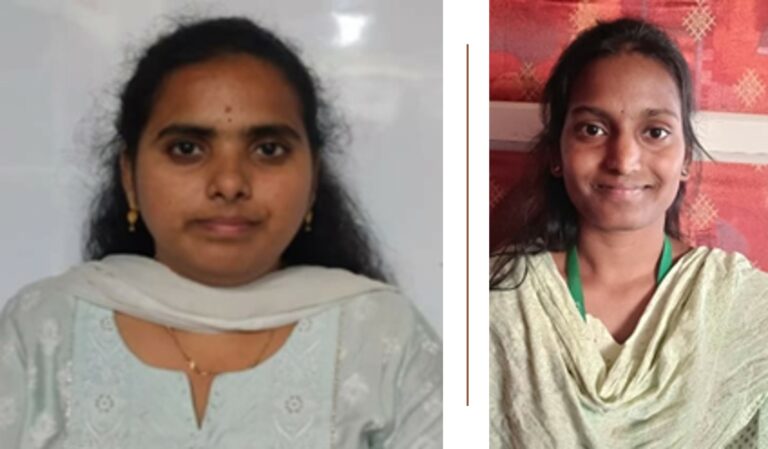
Our internship at Manyam Grains Pvt. Ltd. offered us an in-depth, hands-on understanding of how millet processing industries operate in real time. It moved beyond classroom learning and allowed us to observe how raw grains collected from farmers are transformed into clean, graded, packaged, and market-ready products. This experience helped us clearly connect theoretical processing concepts with actual industry expectations.
We learned the functioning of key processing machinery such as cleaners, graders, destoners, hullers, vibro shifters, sieve graders, and packaging units. Watching these machines run continuously helped us understand how each step improves product quality, efficiency, and market readiness.
.
As part of the internship, we also conducted a market survey in Vizag and Anakapalle. A major finding was that millet consumption remains low in many areas due to limited consumer awareness about millet-based foods and their health benefits. This revealed a clear need—and opportunity—for stronger consumer education and targeted promotion.
Overall, the internship enriched our understanding of different millet varieties, their nutritional strengths, end-to-end processing, quality control, industrial workflows, and real-world market insights.
We are here to help you 7 days a week and respond within 24 hours. Plus, you can find most answers to your questions right on FAQ page.
Plot No. 685 & 686, Street No. 12, Narasimha Swamy Colony,
Nagole, Hyderabad – 500 068, Telangana, India
Tel No: +91 (40) 29555295
Mail: mail@wassan.org
Watershed Support Services and Activities Network (WASSAN) © 2024 by WASSAN is licensed under CC BY-SA 4.0 

@2024 | Watershed Support Services and Activities Network (WASSAN)